
Every February, during Black History Month, we honor the groundbreaking contributions of individuals whose work reshaped the world. One of these remarkable figures is Dr. Charles R. Drew (1904–1950) – a pioneering surgeon, educator, and medical researcher whose innovations in blood preservation continue to save lives today.
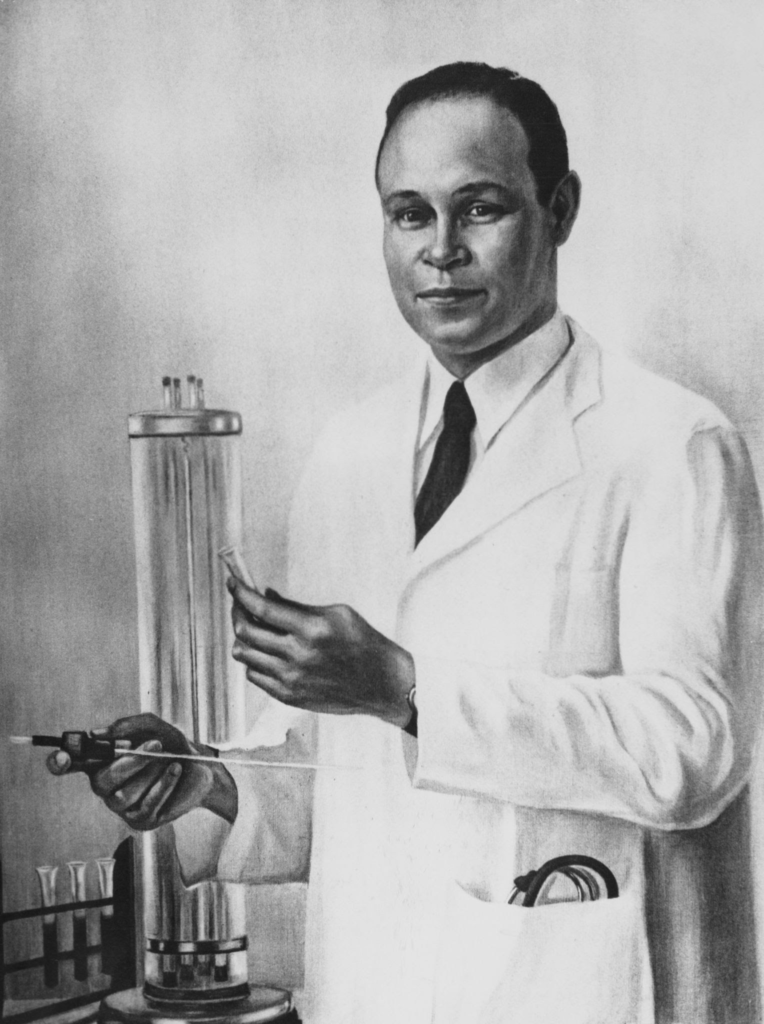
Quick Facts: Dr. Charles R. Drew
- Known For: Developing the first large-scale blood banks and dry plasma preservation techniques.
- Major Initiatives: Medical Director of the “Blood for Britain” project (1940) and first director of the American Red Cross Blood Bank.
- Key Innovations: The “bloodmobile” (mobile blood donation trucks) and methods to mass-separate plasma from whole blood.
- Education: MD from McGill University; Doctor of Medical Science from Columbia University (first African American to earn this degree from Columbia).
The Science of Blood Preservation: How Dr. Drew Saved Lives
Before Dr. Drew’s breakthrough research, whole blood could only be stored for a few days before spoiling, making transfusions on or near active battlefields nearly impossible.
While pursuing his historic doctorate at Columbia University, Dr. Drew focused his thesis on “Banked Blood: A Study in Blood Preservation”. He discovered that blood plasma—the liquid part of blood separated from the red blood cells—could be preserved and stored for much longer periods. Because plasma does not contain red blood cells, it can also be administered to patients of any blood type.
During World War II, this science was put to the test. Dr. Drew was appointed medical director of the historic “Blood for Britain” project. Under his leadership, the program successfully collected and processed over 14,000 blood donations, shipping life-saving plasma across the Atlantic to aid Allied soldiers and civilians.
Leadership, Innovation, and the American Red Cross
Following the success of “Blood for Britain,” Dr. Drew became the first director of the newly formed American Red Cross Blood Bank. Here, he pioneered the system of “bloodmobiles”—refrigerated, mobile donation trucks that standardized how blood was collected, tested, and shipped on a national scale.
However, his leadership was met with systemic barriers. Despite his revolutionary contributions, the U.S. military and the Red Cross insisted on segregating blood donations by race—a discriminatory policy that had no scientific basis. Dr. Drew spoke out courageously against this practice, stating:
“The blood of individual human beings may differ by group, but there is absolutely no scientific basis to differentiate blood by race.”
When the military refused to change its segregation policy, Dr. Drew chose integrity over position and resigned from his post in 1942.
A Lasting Academic and Medical Legacy
After leaving the Red Cross, Dr. Drew returned to academia, serving as the Chief of Surgery and a professor at Howard University and Freedmen’s Hospital. He dedicated the remainder of his life to training the next generation of Black surgeons, fiercely campaigning for their equal rights and integration into the broader American medical establishment.
Dr. Drew’s life was cut tragically short by a car accident in 1950, but his systematic approach to blood banking remains the foundation of modern transfusion medicine today.
To learn more about the scientific mechanics of modern donation, you can read the National Institutes of Health historical profiles here.
Frequently Asked Questions (FAQ)
What did Dr. Charles R. Drew invent?
Dr. Drew invented the methods for processing and preserving blood plasma, allowing it to be stored and transported long distances. He also designed the first mobile blood donation centers, known as “bloodmobiles”.
Why did Dr. Charles R. Drew resign from the Red Cross?
He resigned in protest of the U.S. military and Red Cross policy of segregating donor blood by race, a practice he openly opposed as having no scientific merit.