Published by Medical Muse, a medical school admissions consulting company that offers personalized support to help medical school applicants successfully navigate the competitive admissions landscape.
Table of Contents
Navigating the pre-medical track at any university can feel like a solitary uphill climb. Between demanding science prerequisites, preparing for the MCAT, and securing clinical experiences, students often find themselves overwhelmed by options. While standard campus clubs offer casual involvement, choosing a professional organization can provide career-oriented stability. Joining a pre-med fraternity can serve as an immersive framework that transforms your undergraduate years from a stressful checklist into a more collaborative experience.
Pre-Med fraternities’ core mission focuses on professional cultivation. They bridge the gap between rigorous academic requirements and the soft skills required of future healthcare providers. By surrounding yourself with peers who share your career aspirations, you gain access to resources, advice, and emotional reassurance.

What Exactly is a Pre-Med Fraternity?
The Quick Answer: A pre-med fraternity is a specialized professional organization dedicated to supporting undergraduate students aiming for careers in healthcare. These fraternities focus heavily on academic excellence, peer mentorship, community service, clinical networking, and structured medical school application support.
While these groups adopt Greek letters, their operational culture mirrors professional societies. They welcome students of all genders who demonstrate a serious commitment to entering medicine or allied health fields. Membership usually involves a formal recruitment process, often referred to as “rush,” where applicants attend informational events and interviews.
Once initiated, members step into a highly organized network designed to hold them accountable. Older members who have already navigated the most difficult science classes act as built-in tutors. This dynamic mitigates the competitiveness that is frequently felt by undergraduate pre-med students.
What Are the Core Benefits of Membership?
Joining a pre-med fraternity delivers structured academic accountability, exclusive networking opportunities with healthcare professionals, and hands-on leadership roles. These organizations help you secure volunteer opportunities, clinical avenues, and comprehensive medical school application support.
1. Peer Mentorship and Collective Knowledge
When you join, you instantly gain a network of mentors who have just walked the path you are currently on. They can advise you on which professors fit your learning style, how to balance heavy credit loads, and when to start studying for the MCAT.
2. Centralized Extracurricular Opportunities
Finding consistent volunteer work or shadowing positions can take dozens of cold emails. These fraternities maintain deep-rooted institutional relationships with local clinics, hospitals, and non-profit organizations, providing members with direct pathways to service.
3. Professional Skill Development
Admissions committees look closely at communication and leadership skills. Serving as an officer, organizing an onboarding seminar, or leading a philanthropic fundraiser provides concrete experiences you can discuss during your admissions interviews.

How Do National Pre-Health Organizations Compare?
The Bottom Line: National pre-med professional fraternities and pre-health honor societies vary widely in their scope, eligibility criteria, and campus culture. Selecting the right group depends on whether you seek a multi-disciplinary healthcare focus or a strict, medicine-only pathway.
When evaluating options on your campus, you will likely encounter several prominent national entities. To help you choose the right fit for your specific timeline and background, consider how a select few organizations compare:
| Organization Name | Organization Type | Primary Membership Focus | Target Audience | Key Structural Benefit |
| Phi Delta Epsilon (PhiDE) | Professional Fraternity | Strict Medical Path (MD/DO) | Pre-Med Students exclusively | Deep global network of practicing physicians and medical student chapters. |
| Alpha Epsilon Delta (AED) | Honor Society/ Fraternity | Academic Distinction | Broad Pre-Health fields | Strong institutional emphasis on maintaining elite GPA benchmarks. |
| Delta Epsilon Mu (DEM) | Professional Fraternity | Inclusive Healthcare | Pre-Health, Nursing, Dental, Vet | Broad interdisciplinary collaboration across multiple health fields. |
Making the Most of Your Professional Network
Simply adding a fraternity name to your resume will not impress an admissions committee. The real value comes from active, sustained participation within the chapter. Taking initiative on a committee or volunteering to lead a study group shows true dedication.
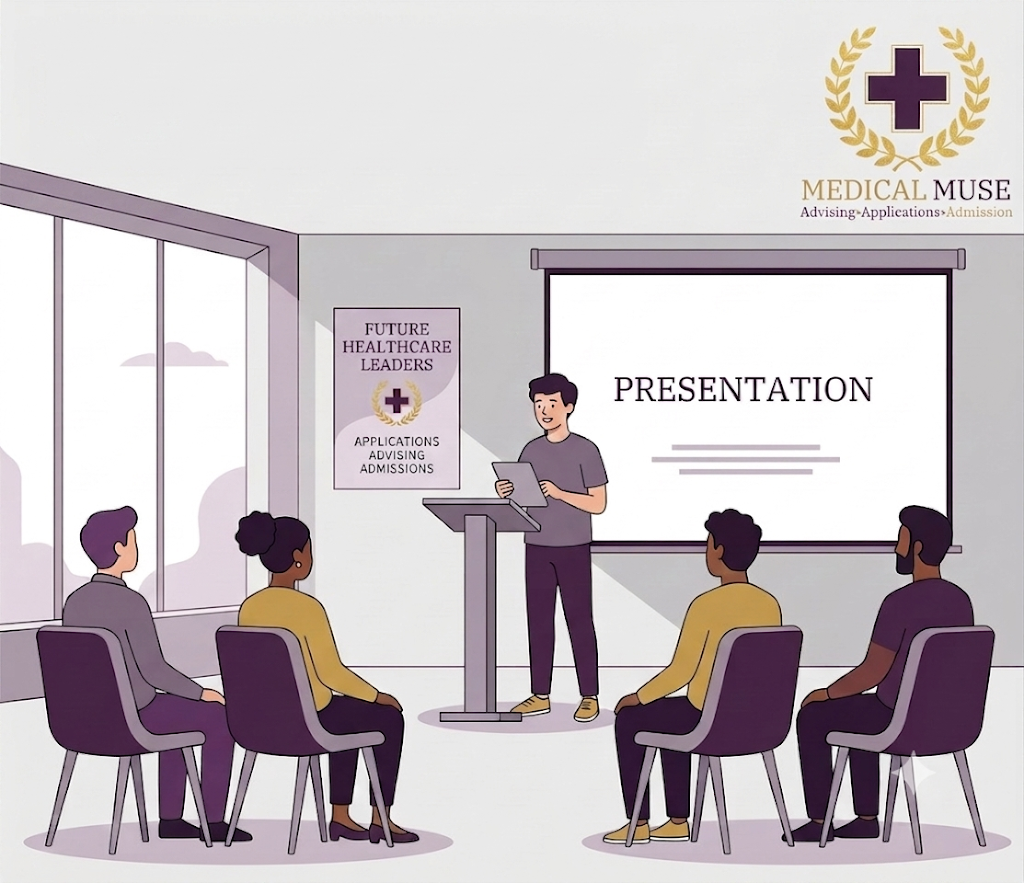
Furthermore, remember that these organizations are built on mutual support. As you advance through your undergraduate years, transitioning from a mentee to a mentor reinforces your own knowledge and demonstrates the altruism that medical schools value.
While a pre-med fraternity provides an excellent foundation, building your unique profile requires individual strategy. If you want to maximize your extracurricular strategy or need personalized guidance on tailoring your experiences, Medical Muse can provide assistance. To evaluate how your current community involvement, academics, and clinical hours stack up against target benchmarks, consider signing up for a Medical Muse Profile Analysis. This targeted diagnostic uncovers hidden weaknesses in your profile and gives you a clear, personalized timeline to resolve them before you submit your primary application.
Frequently Asked Questions
Will joining a pre-med fraternity guarantee my admission to medical school?
No organization can guarantee admission. Medical schools evaluate applicants holistically according to core guidelines, GPA, MCAT scores, personal statements, and clinical experiences. A fraternity provides the supportive framework and resources to help you achieve these milestones, but the execution relies entirely on your individual effort.
Can I join if I am already involved in traditional social Greek life?
Yes, in almost all cases. Because pre-med professional fraternities are categorized as professional societies rather than social organizations, most universities allow dual affiliation. Many students successfully balance both, leveraging the social network of one and the professional resources of the other.
What is the time commitment required for these organizations?
The commitment varies by chapter but generally includes weekly or bi-weekly chapter meetings, mandatory service hours, and professional development workshops. While it requires careful time management, most members find that the academic support and shared study hours save time in the long run.