

A major shift in federal law is changing the math of medical school. The One Big Beautiful Bill Act goes into full effect on July 1, 2026, and it will significantly impact how you fund your medical education. Here is the breakdown of how we are navigating this for our EY26 clients to ensure your medical education remains affordable. — Dr. Ganguly, Medical Muse
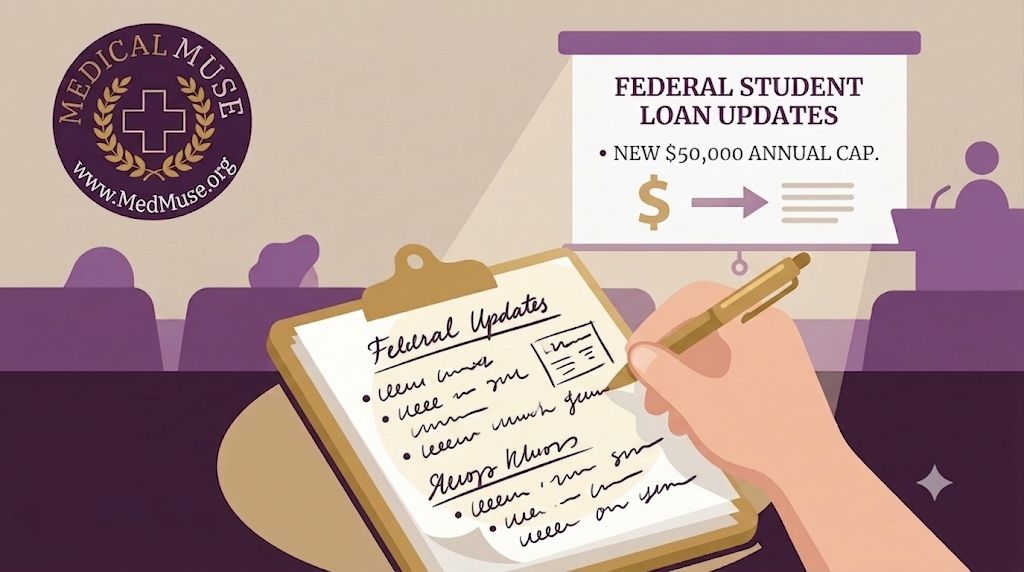
1. What medical school loan changes happen on July 1, 2026?
The One Big Beautiful Bill Act fundamentally changes federal borrowing options for graduate students. If you are a new federal borrower starting a graduate or professional program on or after July 1, 2026, your funding options are strictly capped:
- Annual Cap: Federal Direct Unsubsidized loans are now capped at $50,000 per year.
- Lifetime Cap: Professional studies loans feature a lifetime limit of $200,000.
- Grad PLUS Discontinued: The Grad PLUS program—which previously allowed students to borrow up to the full Cost of Attendance (COA)—is completely discontinued for new borrowers.
2. How to secure “Legacy Status” for medical school loans
To protect your funding from these new caps, you must trigger Legacy Borrower Status before the summer deadline.
Definition: A student qualifies as a Legacy Borrower if their federal student loan is successfully originated and disbursed before July 1, 2026.
Maintaining Your Status
Once you lock in Legacy Status, you can continue accessing Grad PLUS funds (up to your full cost of attendance) for up to three additional academic years. However, continuous enrollment is mandatory; taking an unapproved leave of absence will forfeit your legacy protections.
Action Plan for Late Start Dates
If your medical school program officially starts after July 1, your funds will normally disburse too late. Take these steps immediately to shift your disbursement timeline forward:
- Inquire about bridge programs: Ask if your school offers an early orientation, summer research rotation, or academic bridge course that begins in June.
- Request early relocation disbursements: Ask your financial aid office if they can originate and disburse an advanced portion of your federal loan early to cover moving and relocation costs before the deadline.
3. How do the 2026 loan caps affect medical school waitlists?
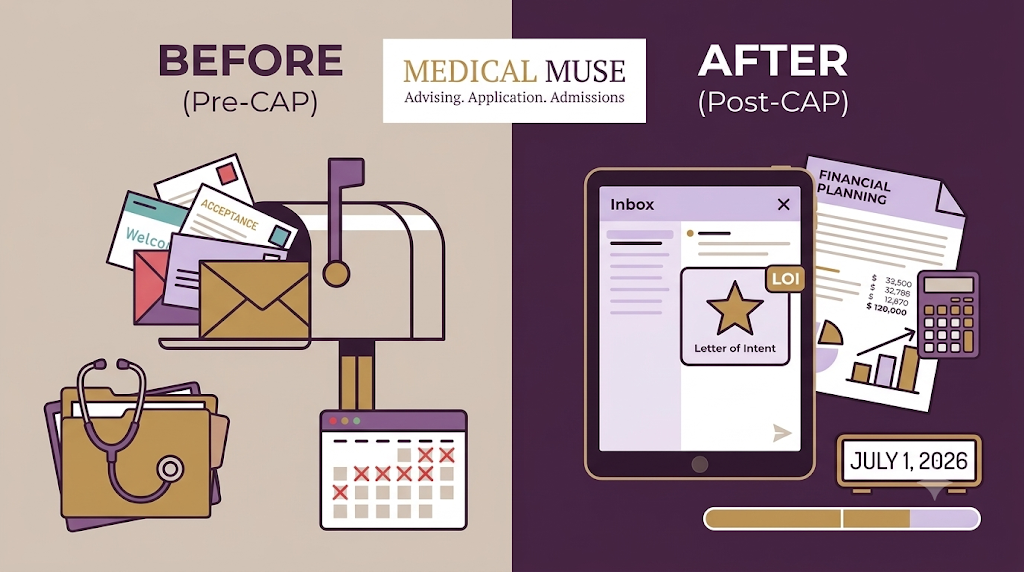
The intersection of these sudden financial shifts and the AAMC’s traditional April 30 “Plan to Enroll” deadline has created an unprecedented landscape for waitlisted students this cycle.
Medical school admissions committees are highly concerned about under-enrollment. They worry that accepted students may decline seats late in the cycle once they realize they cannot bridge the funding gap left by the new $50,000 federal limit.
The Aggressive Intent Strategy
Because schools are searching for “sure bets” who already have a solid plan to matriculate, your communication needs to be direct and explicit.
- What to write: If you are currently hanging on a waitlist at your top-choice program, send an explicit Letter of Intent. Use clear phrases such as: “If accepted, I will matriculate immediately.”
- The Intent Update: If you previously sent a letter of intent earlier this spring, the shifting legislative landscape gives you a perfect, natural reason to reach out again. Send a brief “Intent Update” acknowledging the new loan environment and reaffirming your commitment.
- Important Step: Before sending anything, confirm that your target school accepts additional letters, as some institutions enforce strict document caps.
4. Next steps if you are already accepted to medical school
If you are holding an active acceptance letter, contact your financial aid office today.
Do not wait for the standard summer onboarding sequence. Formally ask their staff whether your specific financial aid package and initial loan disbursement can be processed and completed prior to the July 1 deadline.
5. What if I get accepted off the waitlist after July 1?
Receiving an admission offer after July 1, 2026, means it will be structurally impossible to disburse a federal loan under the old rules. Consequently, you will not be eligible for the Grad PLUS program and will be subject to the new annual $50,000 limit, requiring you to look at alternative institutional or private financing options to cover the remaining balance.
6. Official Med School Loan Resources & Policy Briefs
For deeper programmatic details and statutory language, consult these primary institutional resources:
- University of Illinois: Medical Student Federal Aid Changes — Detailed institutional breakdown of the transition.
- Rutgers University: The “Legacy” Status Trigger — Compliance guide for financial aid timing.
- NASFAA: Official Loan Changes Brief (PDF)— National Association of Student Financial Aid Administrators policy analysis.
Important Disclaimer:
Please note that the provided information is for educational purposes only. I am a medical school admissions consultant, not a financial advisor or attorney. Student loan legislation is subject to change and interpretation, and I strongly recommend consulting with a certified financial aid officer or legal professional regarding your specific financial situation and plans. -Dr. Ganguly, Medical Muse

© Medical Muse, 2026 Source: Medical Muse Strategic Planning. For internal distribution to EY26 cohorts. www.MedMuse.org