

Published by Medical Muse, a medical school admissions consulting company that offers personalized support to help medical school applicants successfully navigate the competitive admissions landscape.
Table of Contents
If you are a pre-med student, midterm season can feel less like an academic checkpoint and more like an intense endurance test. The pressure to maintain an excellent GPA, combined with demanding study schedules and extracurricular activities, can feel overwhelming. Experiencing stress during this phase of your journey is natural (we’ve all felt it at one point!), yet unmanaged anxiety can adversely impact your academic performance.
Chronic stress can directly impair your working memory and mental clarity, which are the cognitive tools you rely on during exams. Fortunately, managing pre-med stress is possible. Implementing sustainable routines allows you to protect your mental wellness while balancing the rigors of pre-med curricula and commitments.
Why Is Managing Pre-Med Stress Essential for Success?
The Takeaway:
Managing stress is vital because chronic academic pressure elevates cortisol, which actively impairs memory consolidation and focus. Prioritizing wellness ensures your brain retains information effectively for your exams.
Entering the medical field requires endurance, and your undergraduate years establish the habits you will carry into professional practice. When you prioritize healthy habits over panic-induced cramming, you can protect yourself from exhaustion.
According to Harvard Health’s analysis on how stress affects the brain, chronic stress can alter brain architecture and impact areas dedicated to learning and emotional regulation. Resilient students demonstrate the self-awareness to balance heavy workloads with personal health. By practicing these strategies early on, you learn how to handle the academic challenges that come with medical school.
6 Evidence-Based Techniques to Combat Academic Pressure
To help you optimize your weekly routine during the exam cycle, here is how six core wellness pillars compare:
| Example | Core Benefit | |
| Consistent Scheduling | Map out fixed blocks for meals, study, and rest. | Reduces decision fatigue |
| Fueling for Success | Limit excessive caffeine; prioritize complex carbs and protein. | Stabilizes blood glucose and energy |
| Physical Activity | Review flashcards or audio notes while on a treadmill. | Lowers cortisol, boosts mood |
| Creative Outlets | Step away from screens to play music or draw. | Facilitates neuroplasticity |
| Sleep | Avoid all-nighters; maintain a fixed wake-up time. | Consolidates long-term memory |
| Digital Detox | Set app timers to block short-form social media. | Restores dopamine baseline |
1. Intentional Scheduling and Time Block Management
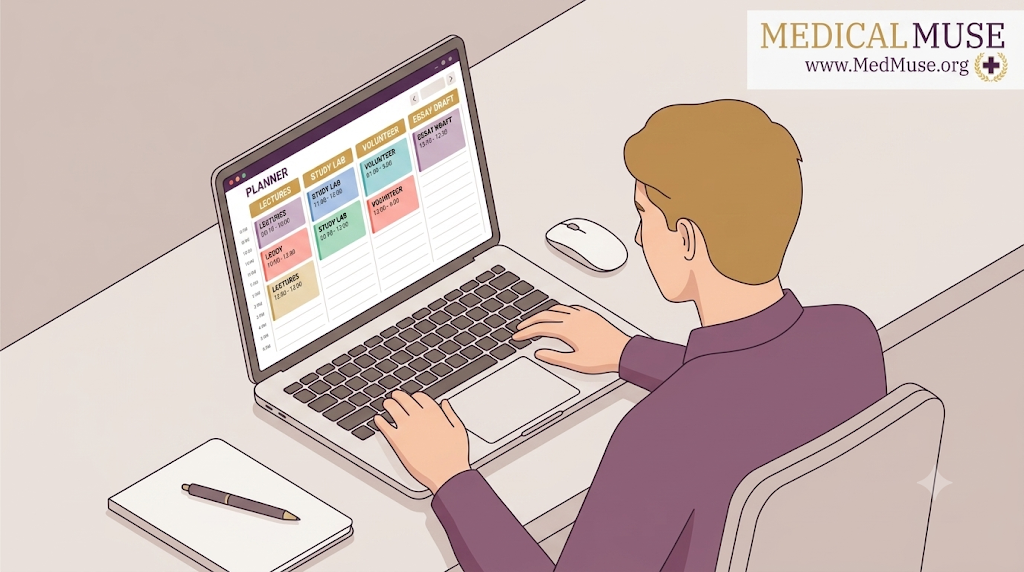
Maintaining a structured daily timeline keeps your nervous system in equilibrium. Instead of studying in unstructured bursts, intentionally block out specific hours for focused active recall. This predictable rhythm eliminates the friction of deciding what to do next, allowing your brain to transition into deep focus more efficiently.
2. Fueling Yourself for Success
Balanced meals rich in lean proteins, complex carbohydrates, and healthy fats keep your blood sugar stable, preventing the sudden cognitive crashes that trigger panic. While stimulants provide temporary focus, these substances (caffeine, sugar) amplify physical anxiety symptoms.
3. Incorporating Low-Impact Physical Activity

Even brief periods of movement can drastically reduce stress hormones while elevating endorphins. Walking while listening to lectures or reviewing digital flashcards on a treadmill are popular strategies to maintain physical health without sacrificing study time.
4. Protecting Creative Outlets
Engaging in music, art, or a favorite hobby provides an essential cognitive reset. Taking brief, structured breaks for activities you genuinely enjoy allows your prefrontal cortex to synthesize newly learned material. When you spend your downtime on fulfilling pastimes rather than digital scrolling, you return to your textbooks with renewed mental stamina and clearer focus.
5. Prioritizing Restorative Sleep Hygiene
Sleep is a non-negotiable biological requirement for long-term memory consolidation. Aim for seven to eight hours of continuous rest per night, particularly during midterm weeks, and avoid counterproductive all-nighters. Disrupting your circadian rhythm severely diminishes your processing speed and emotional regulation, making consistent sleep schedules one of your most powerful academic assets.
6. Minimizing Short-Form Digital Stimulation
Managing your exposure to short-form content is incredibly beneficial for wellness. Falling into late-night social media rabbit holes fragments your attention span and increases anxiety. Setting screen time limits on your phone frees up time in your day and ensures your brain can enter deep, restorative sleep states.
Securing Institutional and Mentorship Support
The Quick Answer:
Seeking external guidance when academic pressure escalates is a sign of professional maturity, not weakness. Accessing campus counseling, faculty mentorship, or specialized advising ensures sustainable success.
Sometimes, balancing coursework alongside clinical volunteering can feel overwhelming, and recognizing that limit is an important step. Utilizing your undergraduate institution’s mental health resources or academic counseling center is a responsible decision that mirrors the collaborative nature of modern medicine. Seeking psychological support is a core component of effective stress management, as detailed in the Mayo Clinic’s comprehensive guide to stress management techniques.
Additionally, connecting with experienced mentors can provide clarity and support. Medical Muse offers personalized advising to help medical school applicants successfully navigate these exact hurdles. Our Monthly Advising Clinic provides continuous accountability and structured milestone planning. By mapping out your extracurricular commitments alongside your academic calendar, Medical Muse will help you establish balanced routines and prevent burnout before it strikes.

Frequently Asked Questions
How do medical school admissions committees view a student who took a break for mental health?
Admissions committees view applicants who proactively manage their well-being with immense respect. Demonstrating the maturity to step back, implement healthier habits, and return to achieve academic excellence showcases outstanding resilience.
Can severe undergraduate burnout permanently impact my medical school application?
Burnout itself does not impact your file, but the resulting drop in GPA or withdrawal from clinical activities can create hurdles. Catching signs of exhaustion early allows you to maintain a steady, competitive trajectory.