

Published by Medical Muse, a boutique admissions consulting firm that offers personalized support to help medical school and residency applicants successfully navigate the increasingly competitive admissions landscape.
Navigating the Electronic Residency Application Service (ERAS) demands strategic planning, especially when customization enters the equation. For many applicants, drafting a single essay is not enough to cover their specific career goals or backup plans. Understanding when and how to handle multiple personal statements in ERAS can significantly boost your application strategy while safeguarding you against critical errors. Whether you are targeting distinct specialties, applying to transitional years, or tailoring your background to specific program types, managing your documents correctly is critical to application success.
| Personal Statement Strategy | Primary Target Applicant | Our Recommendation |
| Dual Applying Applicants | Candidates applying to two distinct medical fields (e.g., IM and EM) | Write two distinct essays; align experiences with specialty competencies. Avoid rejection by choosing the right statement. |
| Categorical vs. Preliminary | Candidates in advanced specialties (e.g., Dermatology, Radiology). | Create one essay for categorical programs and one broader intern-focused statement for preliminary programs. Mention goals in a prelim essay. |
| Program Culture Alignment | Research-heavy vs. community-focused applicants | Emphasize research background for academic sites; highlight continuity for community sites. Avoid over-customization without structural differentiation. |
| Geographic Targeting | Applicants with compelling personal ties to specific regions | Highlight regional family ties or partner commitments in tailored variants. Avoid mixing up regional hospital names. |
Why Do Applicants Use Multiple Personal Statements in ERAS?
The Takeaway:
Creating multiple personal statements in ERAS allows applicants to tailor their qualifications for dual-applying to specialties, preliminary intern years, distinct academic versus community program cultures, or specific regional ties. Assigning targeted essays ensures your narrative aligns directly with what program directors seek.
The decision to draft distinct essay variants usually stems from a clear need, rather than a desire to overcomplicate the process. The most common scenario involves candidates who are dual applying. Before drafting individual statements, reviewing core principles fora residency personal statement can help establish a clear thematic focus. Sending an essay focused on outpatient Internal Medicine to an Emergency Medicine program director demonstrates a lack of focus and is a red flag. Tailoring separate essays guarantees that your story aligns with the specific scope of practice outlined in AAMC’s Careers in Medicine Specialty Profiles.
Another primary motivation involves separating categorical tracks from preliminary or transitional-year slots. Applicants entering advanced specialties—such as Dermatology, Anesthesiology, or Diagnostic Radiology—require a specialized statement for their primary field. However, they also need a broader statement for preliminary internal medicine or transitional year programs. This preliminary statement should emphasize your commitment to being a hardworking, adaptable intern during your foundational clinical year rather than your advanced specialty goals.
Finally, institutional culture and geographic ties often warrant custom essay variants. University-based academic programs often value clinical research, whereas community hospitals prioritize continuity of care and service to underserved populations. Furthermore, if you possess genuine family or spousal ties to a specific region, crafting a localized variant explicitly stating those regional connections benefit you. Begin the personal statement drafting process early to ensure you have enough time to refine these distinct narrative versions.
What Are the Best Practices for Managing ERAS Statements?
Organizing and Formatting Your ERAS Personal Statements
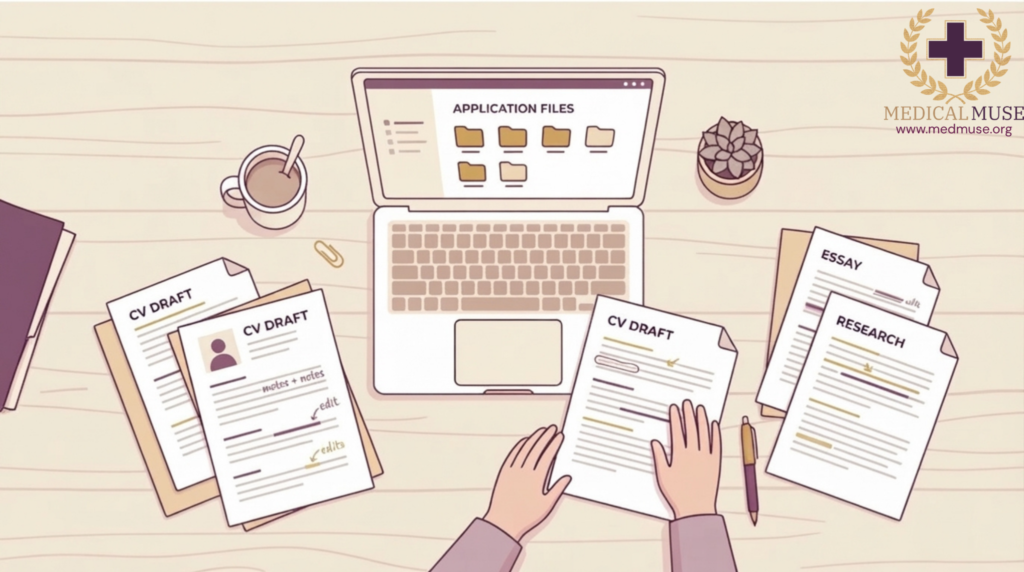
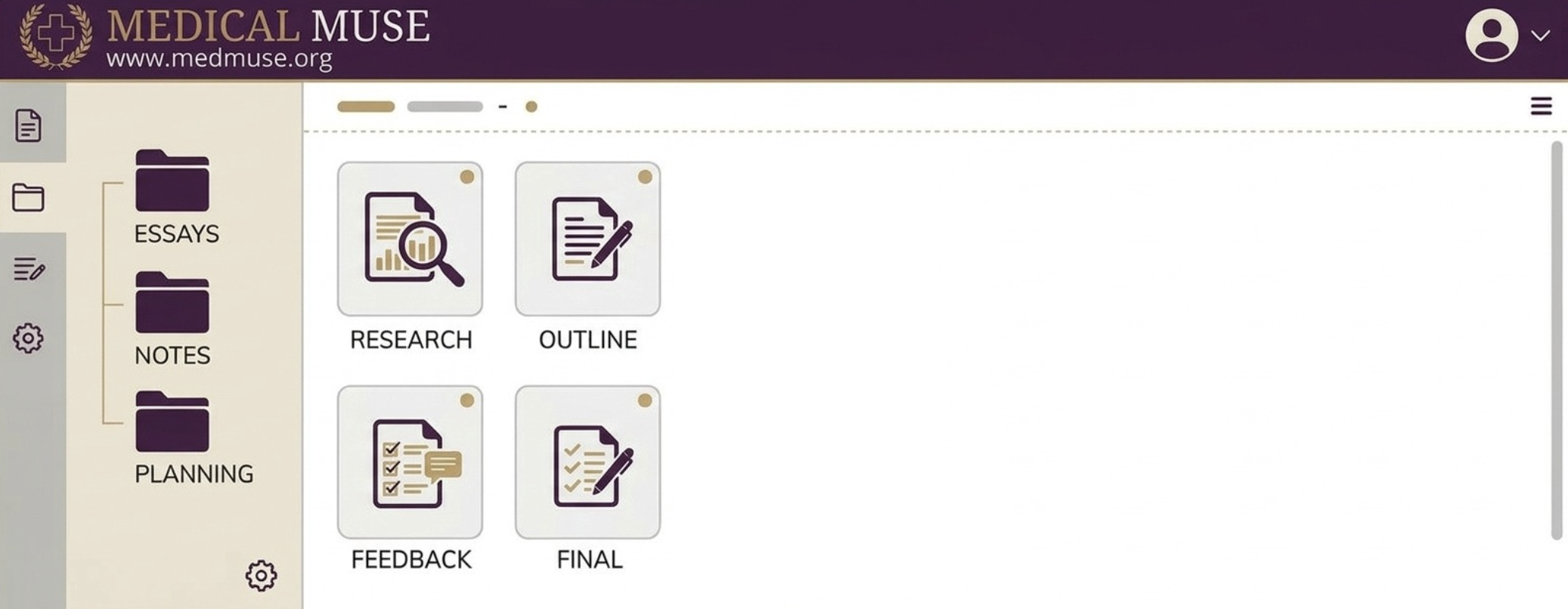
To manage multiple personal statements in the ERAS platform, use descriptive internal slot titles for clear identification and draft all content in plain-text editors. These simple actions eliminate hidden formatting errors and prevent mix-ups when assigning essays to residency programs.
Organizing your documents correctly inside the portal prevents administrative errors. The AAMC recommends assigning a descriptive title to each file you upload to the ERAS platform. Because program directors cannot see these internal titles, you should use explicit, highly descriptive labels. Identifiers like “EM_General,” “IM_Academic_Research,” or “Prelim_Midwest_Geo” ensure you never assign the wrong file during submission.
Additionally, always draft and edit your essays in a plain-text program, such as Notepad on Windows or TextEdit on Mac, before pasting text into the portal. Standard word processors like Microsoft Word or Google Docs embed invisible formatting codes, smart quotes, and custom line breaks. When pasted directly into ERAS, these hidden codes can distort your spacing, indentations, and paragraph alignment, leaving program directors with unreadable text blocks.
How Can You Prevent Strategic Personal Statement Errors?
The Quick Answer:
If it is appropriate to submit the same personal statement to all programs, that should be your default strategy. You may rely on geographic signals, program preferences, and interviews to convey individual interest.
While customizing an essay for a specific hospital sounds impressive, it introduces significant risk into your application strategy. Every cycle, residency program directors report receiving essays intended for rival institutions—such as a Chicago program reading a final paragraph dedicated to training at the University of Miami. Making these common residency application personal statement errors signals a lack of attention to detail and can seriously jeopardize an otherwise strong application.
Unless a program explicitly requires a custom prompt in their application supplemental materials, keep your essays specialty-specific rather than hospital-specific. Utilize official options detailed in AAMC’s Geographic Preferences and Program Signaling Guide alongside effective residency interview preparation strategies to convey individual program interest. Hyper-specific customization should be reserved for supplemental prompts and interviews.
Managing multiple essay variants for dual-applying applicants or preliminary programs requires careful strategy and execution. The Medical Muse Elite Personal Statement Clinic provides 1-on-1 strategy sessions, story development, and unlimited review rounds to refine your messaging across all application tracks. Applicants needing specialized secondary variants can also utilize our Additional Personal Statement Add-On to ensure every document assigned in ERAS highlights their strengths without strategic errors. Contact Medical Muse today to receive personalized guidance for all of your residency application needs.
Frequently Asked Questions
Can I write a different personal statement for every single program?
While allowed in ERAS, writing program-specific statements for dozens of hospitals is strongly discouraged. The risk of copy-paste mix-ups far outweighs the minor benefit of naming a specific institution, making specialty-specific statements a much safer choice. Additionally, the time you spend refining your essays for each program could better be spent on other areas of your application. A great resource for this is Medical Muse, where we can help you tailor different areas of your application to specific programs, allowing you to focus your energy on crafting one exceptionally strong personal statement.
How many personal statements can you upload to ERAS?
ERAS allows you to upload an unlimited number of created or saved statements. However, each individual residency program can only receive one assigned statement. Using clear internal slot titles helps ensure each program receives the correct version.
Do program directors see the slot titles given to personal statements?
No, program directors cannot see the slot titles you assign in ERAS. Slot titles are strictly for your internal organization, so you should name them as explicitly as possible to avoid assignment errors.